Start with one real case
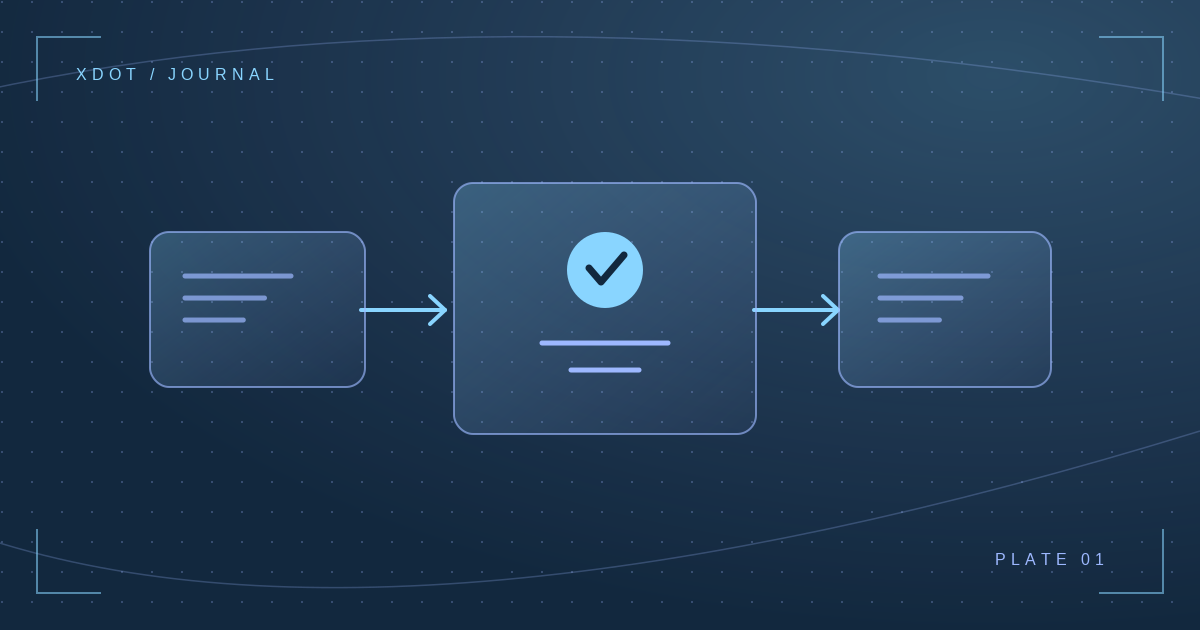
Pick a request your team completed recently. Draw the start and end: “a web form was submitted” and “a complete record is visible to a named owner.” Do not treat “someone saw the notification” as completion. Record the actual path, including any manual copying, rather than drawing what the process is supposed to do.
Make each handoff explicit
For each step, note the owner, the input and where the result lives. In a lead intake example, the form supplies the request, the CRM owns the customer record, and a sales coordinator validates the owner assignment. If two tools disagree, decide which is authoritative before integrating them.
Separate exceptions from the main path
List the incomplete form, duplicate request and integration outage as three separate scenarios. Define which inputs are safe to infer, which must be requested, and which should block records. Route unresolved items into a visible review queue instead of silently marking them complete.
Agree on a pass condition
Walk through at least one normal case and one case for each exception with sample data. Measure elapsed time and corrections before making changes. Keep the map small enough that an owner can explain what will happen during an outage and point to the manual fallback.